Cloud is a product choice; starch is a process question
A cloudy passion fruit juice or pulp can be the intended product. Suspended pulp contributes body, colour and a characteristic texture, and many buyers prefer it to a clear liquid. Starch is a different subject: it is a component of the fruit that can change viscosity when it gelatinises. A product can be pleasantly cloudy without being difficult to pump, and a visually clear sample can still contain starch that thickens later.
The first step is therefore to describe the target product in the terms a buyer would use: clear or cloudy, seed-free or seeded, pourable or spoonable. Then describe the process behaviour separately: viscosity at the relevant temperature, sediment, gel formation after heating and the way the liquid behaves during concentration. Keeping those descriptions apart prevents a product preference from being mistaken for a processing constraint.
Why a clear sample can thicken after heating
FAO notes that passion fruit juice can contain roughly 0.5 to over 3 percent starch, and that viscosity can increase on pasteurisation or concentration as the starch gels unless the juice is pretreated with amylase or separated by centrifugation. That is a qualitative warning, not a recipe. The actual response depends on the fruit, the juice preparation, the temperature history and the concentration reached.
A bench heat test is more informative than a room-temperature viscosity reading. Heat a representative sample through the intended temperature range, hold it for a defined period, cool it and observe again. Record the method and the sample history. If the sample thickens, the next question is where in the process that change occurs and whether the selected equipment can handle it, not simply whether a different enzyme dose will make the number look better.
Separate the measurements before choosing a treatment
Soluble solids, total solids, suspended pulp, sediment, viscosity and starch presence are different measurements. A refractometer reading does not describe the pulp load, and a viscosity reading taken at one temperature does not predict the whole evaporation path. Record each result with its method and condition.
If starch is suspected, a suitable indicator check can establish whether it is present, but the result still needs to be connected to the intended process. The useful bench set includes the feed, a heated sample at the relevant conditions and the concentrate or intermediate the plant expects to make. This does not replace a product-specific trial or a competent thermal-process assessment; it gives that work a defined starting point.
Define the concentrate target before evaporation
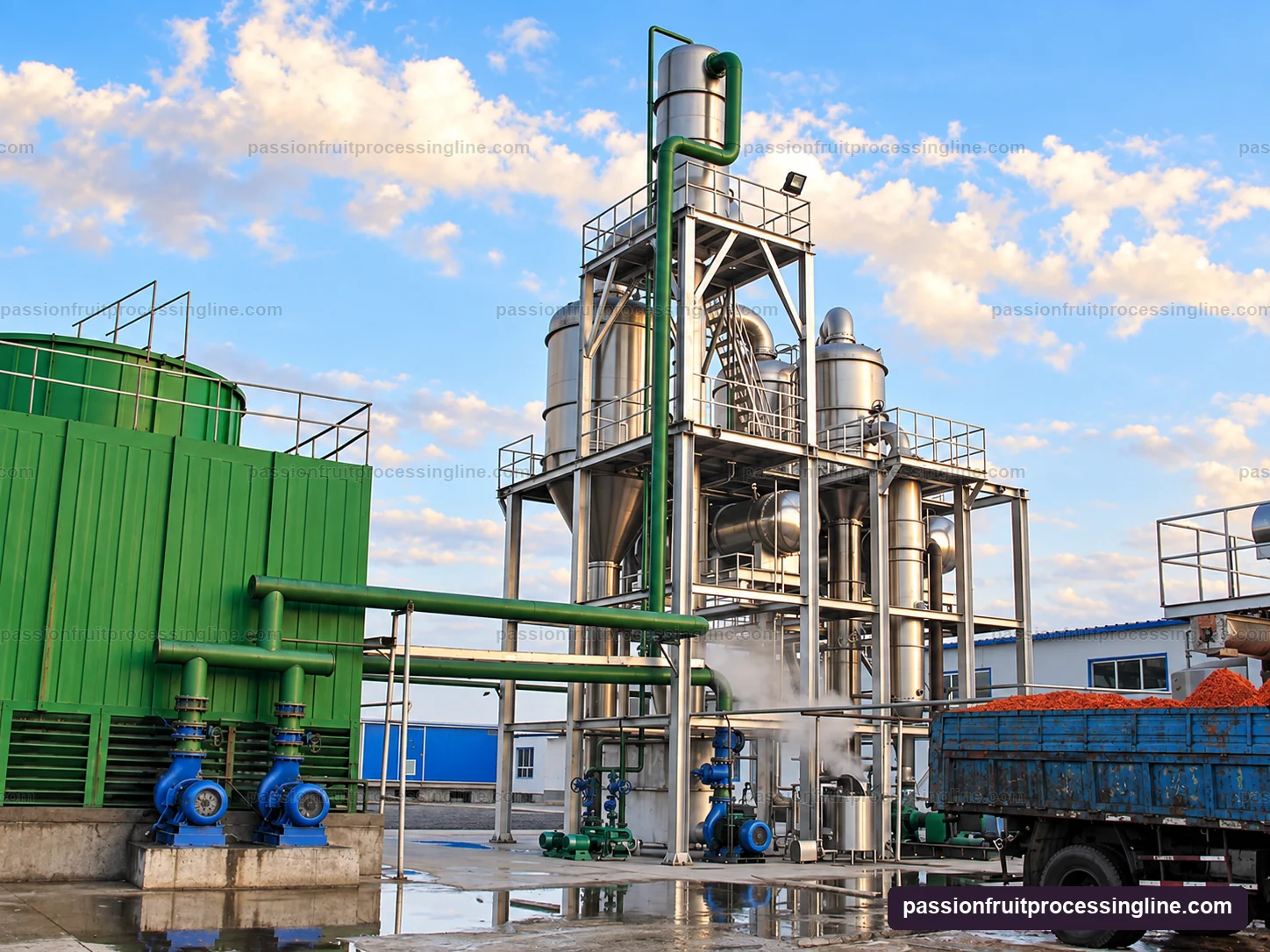
An evaporator duty is defined by feed flow, feed solids, target solids and the water to be removed. The concentrate’s viscosity and suspended material then affect circulation, heat transfer and pumping. A target expressed only as a feed rate can hide the condition that actually limits the equipment. FAO notes that acceptable passion fruit concentrate above 60°Brix can be produced with attention to low-temperature or short-residence evaporators, but that statement is a process direction, not a guarantee for every feed or every machine.
Aroma is part of the same decision. FAO observes that the delicate flavour is diminished by pasteurisation and that even gentle concentration and essence recovery do not fully match the fresh or frozen product. The line design can include volatile collection and return where required, but it should not promise that the original aroma is unchanged. The product specification and the process trial need to say what is acceptable.
Scope an enzyme or centrifuge trial narrowly
Enzyme treatment and centrifugation are optional assessed process interfaces, not standard catalogue products on this site. FAO describes amylase treatment and centrifugation as routes that can address starch-related viscosity, but the source does not establish a universal dose, temperature or hold time. Those conditions belong to a product-specific trial with the actual enzyme preparation and the actual juice.
A narrow trial asks one question at a time: does the treatment reduce the viscosity or gel behaviour under the intended heat history, and what does it do to cloud, colour, aroma and yield? Compare treated and untreated samples from the same feed. If the trial changes the product identity, that is a commercial and regulatory decision as well as a technical one. The equipment quotation should stay within the documented scope rather than implying that an enzyme system or centrifuge is included when it is not.
Keep heat treatment and product identity in the same review
A thermal process is established for the actual product, packaging and storage conditions. The FDA’s juice HACCP guidance addresses hazard analysis, control measures and the records that support a juice operation; it is not a universal passion fruit recipe and it does not certify a machine. Where the product is sold as juice, the applicable regulatory framework and the role of a competent process authority need to be confirmed for the actual operation.
The practical point is that starch handling cannot be separated from the thermal and concentration steps that follow. A treatment that makes the liquid easier to pump may also change its cloud, colour or flavour. The review should include the whole product path, with samples taken before and after each operation and a clear statement of what was measured.
The bench record that supports a decision
Record the fruit or juice lot, the preparation method, the sample’s temperature history and the measurement conditions. Keep the raw observations as well as the conclusion. If an enzyme or centrifuge trial is run, record the preparation, the contact conditions and the post-treatment handling so that another person can interpret the result.
A negative result is useful too. If the untreated juice remains within the pumping and evaporation window, the simplest route may be no additional treatment at all. The aim is not to add a process step by default; it is to make a defensible decision about the product the plant intends to sell.
Primary sources
Sources used in this note
Links were checked on 28 October 2026. They inform the process context above; they do not validate a machine configuration, a commercial result or a processing schedule for another product.
- FAO Bulletin 146, Chapter 15: Tropical fruitswww.fao.org/4/y2515e/y2515e17.htm
- FDA: Juice HACCP Hazards and Controls Guidancewww.fda.gov/regulatory-information/search-fda-guidance-documents/guidance-industry-juice-hazard-analysis-critical-control-point-hazards-and-controls-guidance-first