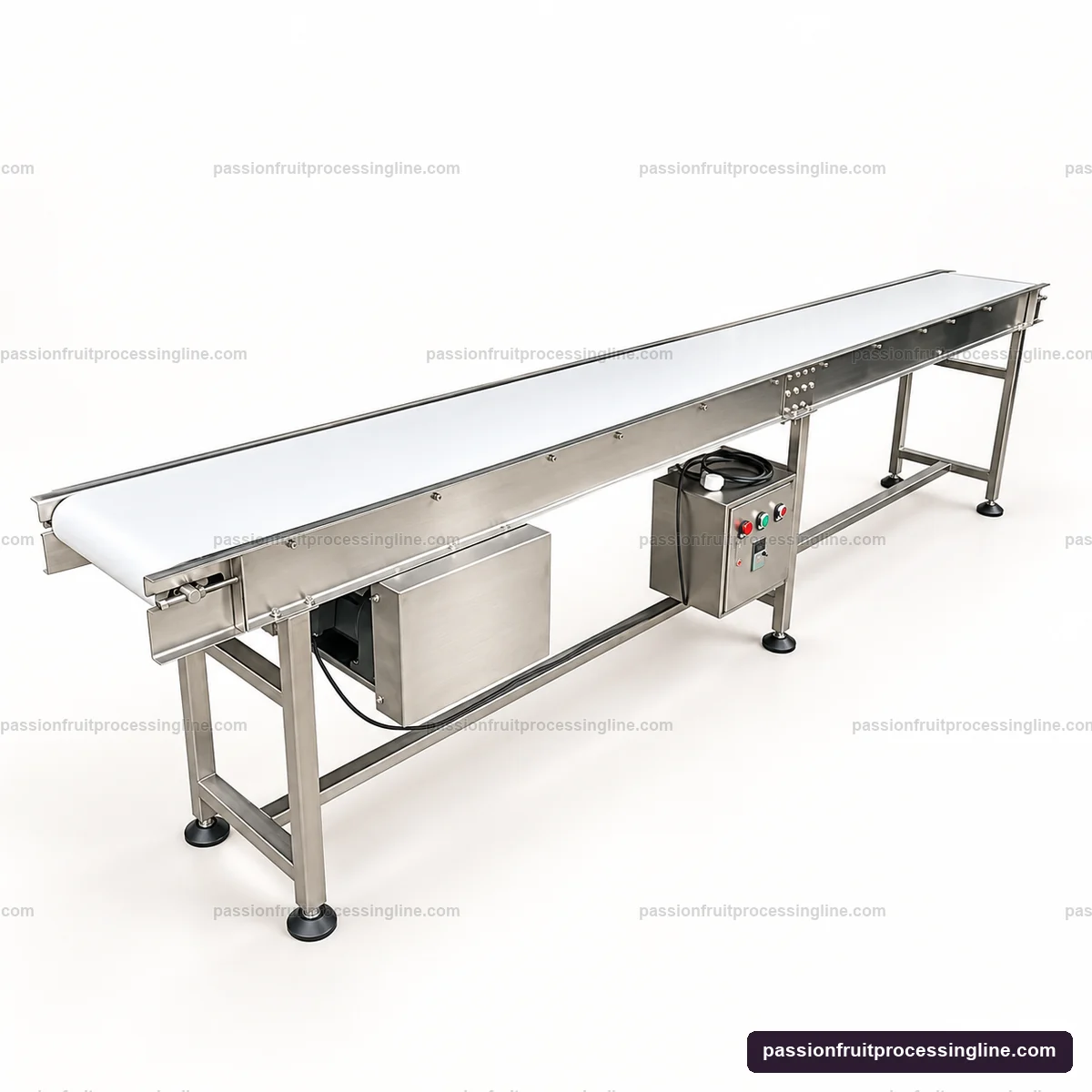
Give operators a view of the fruit they need to assess
Inspection depends on visible fruit surfaces and manageable loading. A deep pile can hide defects even when the belt transports the required hourly mass. Feed presentation, belt speed and the available inspection positions should therefore be considered as a group.
Define the receiving criteria with the product team, including damaged or visibly unsuitable fruit and foreign material. Manual visual sorting addresses what operators can observe; laboratory quality checks and the hygiene plan cover other acceptance requirements.
Arrange the belt around work and rejection points
| Element | Line-design requirement |
|---|---|
| Working width | Fruit visibility and practical reach from the chosen operator positions |
| Working length | Inspection time at the intended belt loading and speed |
| Reject collection | Accessible removal points with a route away from accepted fruit |
| Discharge | Controlled delivery to opening without unnecessary accumulation |
| Controls and guards | Reachable stops and safe access around the drive and transfer points |
Keep accepted fruit separate from the shell and seed circuits
The accepted-fruit outlet connects to the selected opening arrangement. The conveyor is a transfer and inspection stage; the opening station releases seed-bearing pulp, while subsequent collection and finishing establish the desired juice or pulp specification.
Show the reject route alongside shell and seed handling on the layout. Crossings, open bins and difficult drain positions can undo an otherwise orderly transfer from washing to opening.
Specify the belt as part of the wet processing area
Belt surfaces, return rollers, side rails and transfer gaps require suitable access for cleaning. Product debris should be removable from the lower frame and drive guard without dismantling unrelated downstream equipment.
Confirm belt material, tracking access, washdown conditions and replacement clearances. The final working height and belt dimensions should follow the site layout and operating team, while capacity is checked using the expected fruit presentation.
In practice
Questions about this stage
Does this conveyor include automatic optical grading?
This configuration is a manual inspection and transfer conveyor. If optical grading is required, it needs a separately specified detection system, fruit presentation arrangement and acceptance test.