Work from the fruit's structure
The opening arrangement receives clean, inspected fruit and exposes the interior for collection. Fruit size, shell condition and feed presentation influence that operation. The objective is to release usable material while keeping shell discharge separate, rather than reducing the entire fruit indiscriminately.
An opening section therefore has at least three important interfaces: incoming fruit, collected seed-pulp and discharged shell. Their relative heights, access and flow pattern determine how the adjoining conveyor and liquid equipment are connected.
Collect the interior without hiding the waste route
Collection should direct the released material to the next stage without unnecessary splashing or long exposed hold-up. Shell pieces and retained fruit can accumulate around outlets and transitions, so these surfaces must be accessible to operators.
Shell handling is designed alongside product handling. A waste container that blocks screen access or crosses an exposed product route makes an otherwise simple process harder to operate and clean.
Apply finishing to the extracted material
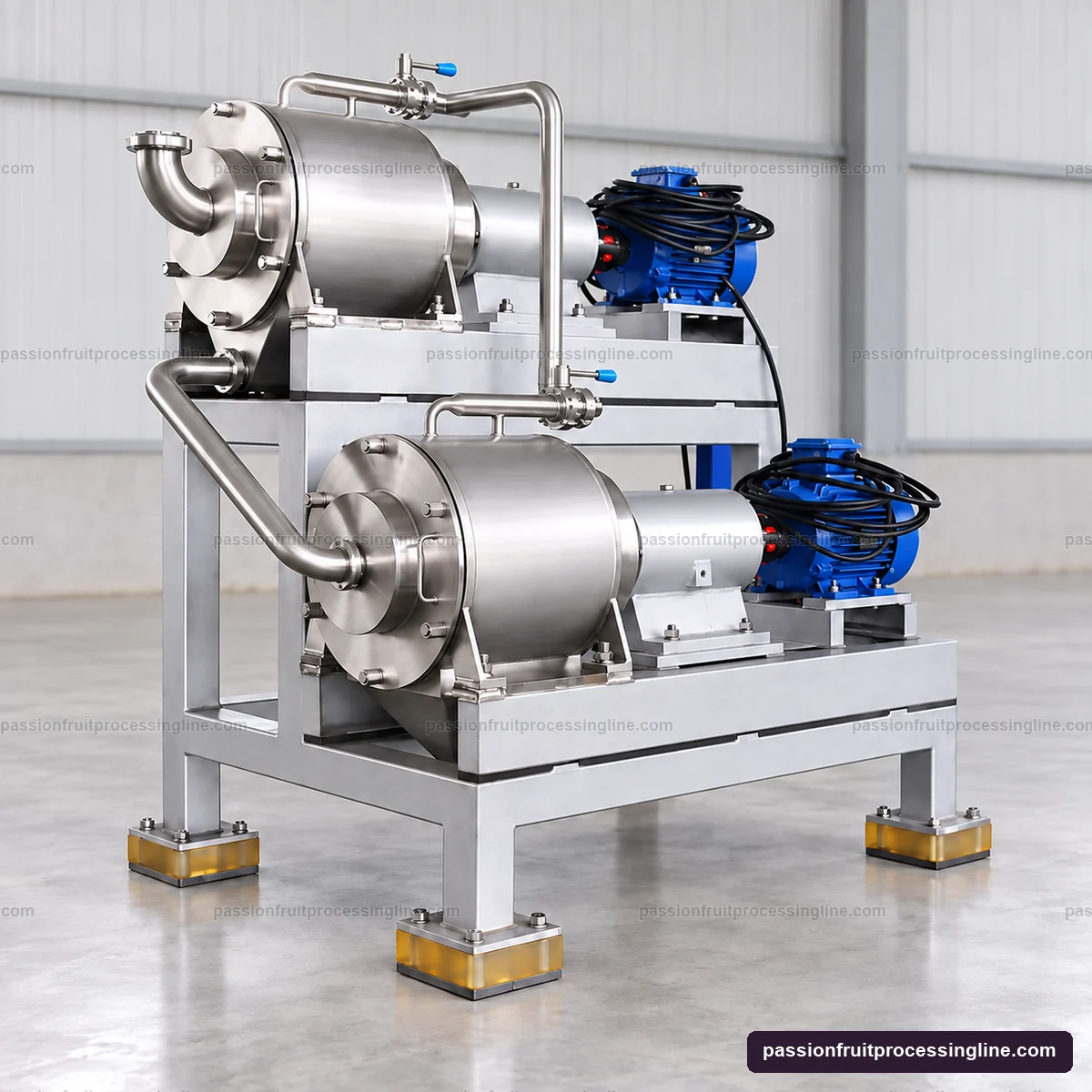
Once the shell has been removed, seed-pulp can be directed to screened finishing for a smoother liquid. The two-stage pulping and refining assembly offers successive separation within one machine; its inlet condition and screen arrangement must suit this material.
A screen opening alone does not define the finished ingredient. Feed rate, fruit condition and mechanical action affect what passes through and what leaves in the reject stream. Seed-free juice, controlled suspended pulp and intentionally seed-containing material require different decisions at this boundary.
Assess the streams as well as the product sample
A representative run compares the collected product with the shell and seed-rich rejects. Product inspection addresses shell specks, seed fragments and pulp consistency; recovery is assessed with measured input and output rather than a nameplate capacity.
Opening and finishing settings should be considered together. A change that increases liquid recovery but also increases undesirable fragments is not automatically an improvement. The downstream thermal and filling equipment still needs a product within its handling window.
In practice
Questions about this stage
Does a two-stage finisher replace fruit opening?
No. The finisher acts on prepared fruit material. Opening the shell and collecting the interior are upstream duties with their own feed and waste interfaces.