Prepare a steady, inspectable fruit stream
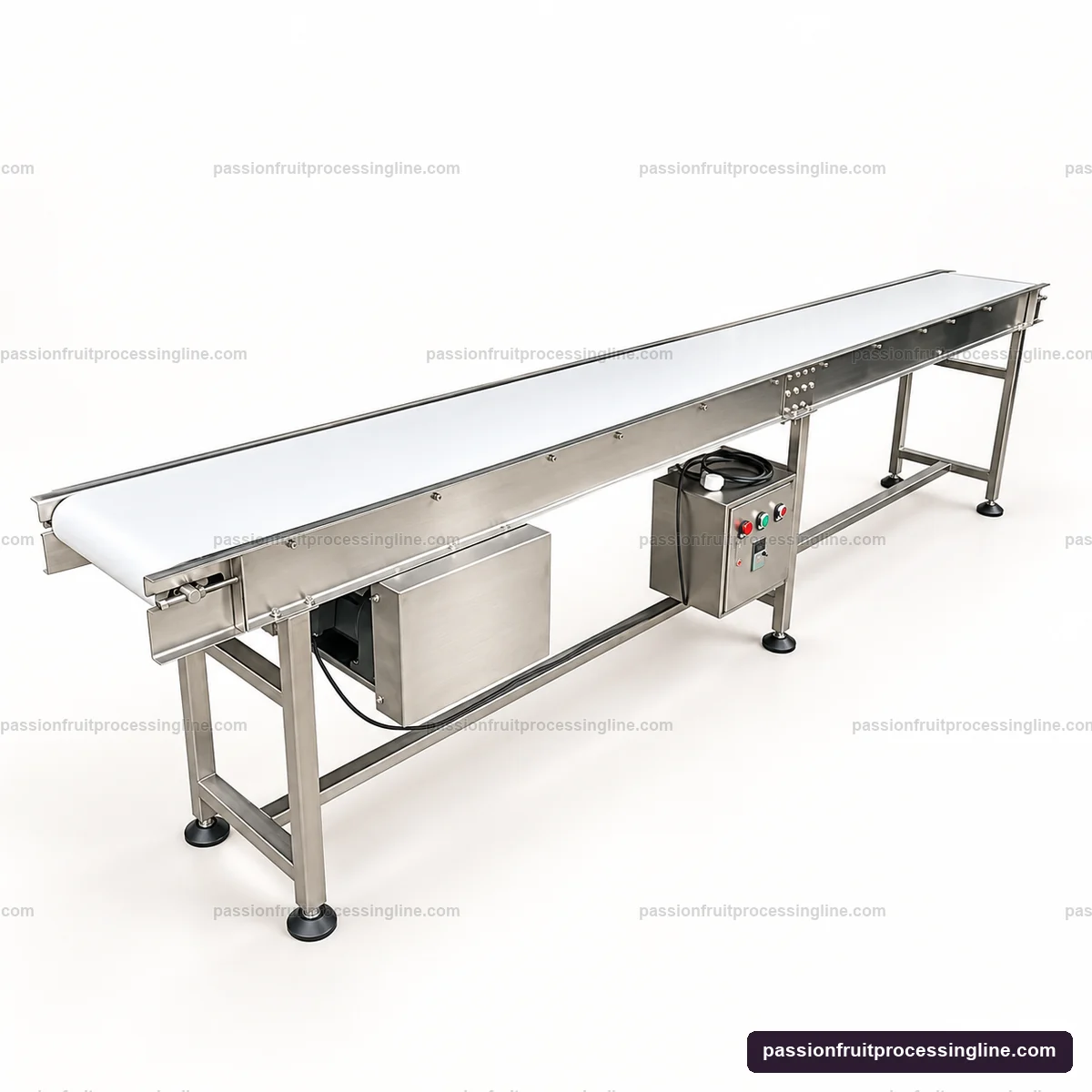
An intake elevator moves fruit between receiving and preparation heights. The washing section removes surface dirt before the shell is opened; spray coverage, contact action and drainage are selected around the incoming fruit. A manual inspection conveyor gives operators room to remove damaged fruit and foreign material before extraction.
The transfer arrangement matters as much as nominal capacity. A backed-up opening section must be able to slow upstream feed, while the discharge of wash water and rejected fruit stays separate from collected juice and pulp.
Separate shell removal from seed-pulp finishing
Opening and pulp collection sit between fruit preparation and the liquid section. This interface receives washed fruit, removes shell material and collects the seed-bearing interior. Shell discharge needs its own accessible route so waste does not pass across the product collection area.
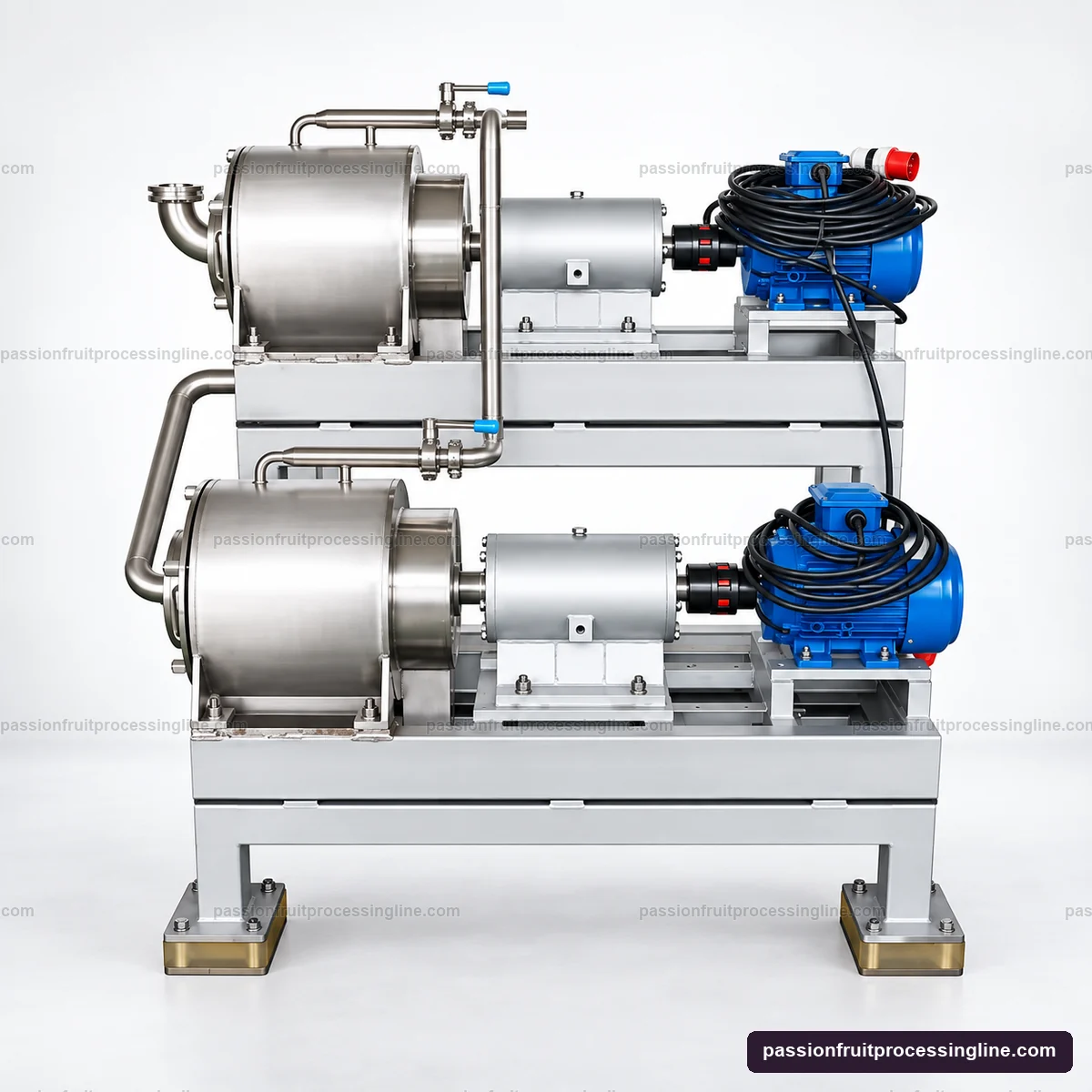
The extracted material then enters the finishing operation selected for the product. A two-stage screened pulping and refining machine provides successive separation within one assembly. Screen choice and operating conditions determine the material that passes to the liquid outlet; a seed-containing ingredient follows a different separation requirement from seed-free juice. The finisher is not the device that opens whole fruit.
Keep the downstream equipment continuously supplied
A product buffer receives the variable flow leaving separation and supplies the next process at a controlled rate. The working volume, level controls and transfer arrangement are sized around the difference between incoming pulp production and downstream demand. Holding more product is not automatically better: residence time, air contact and cleaning changeovers also matter.
Vacuum deaeration can be added where entrained air and foam interfere with treatment or filling. Its chamber, condenser and discharge pump operate together, with the product temperature and vacuum selected for the liquid. Aroma recovery and condensate handling belong in that configuration rather than being assumed from the presence of a vacuum vessel.
Match treatment and packaging to the ingredient
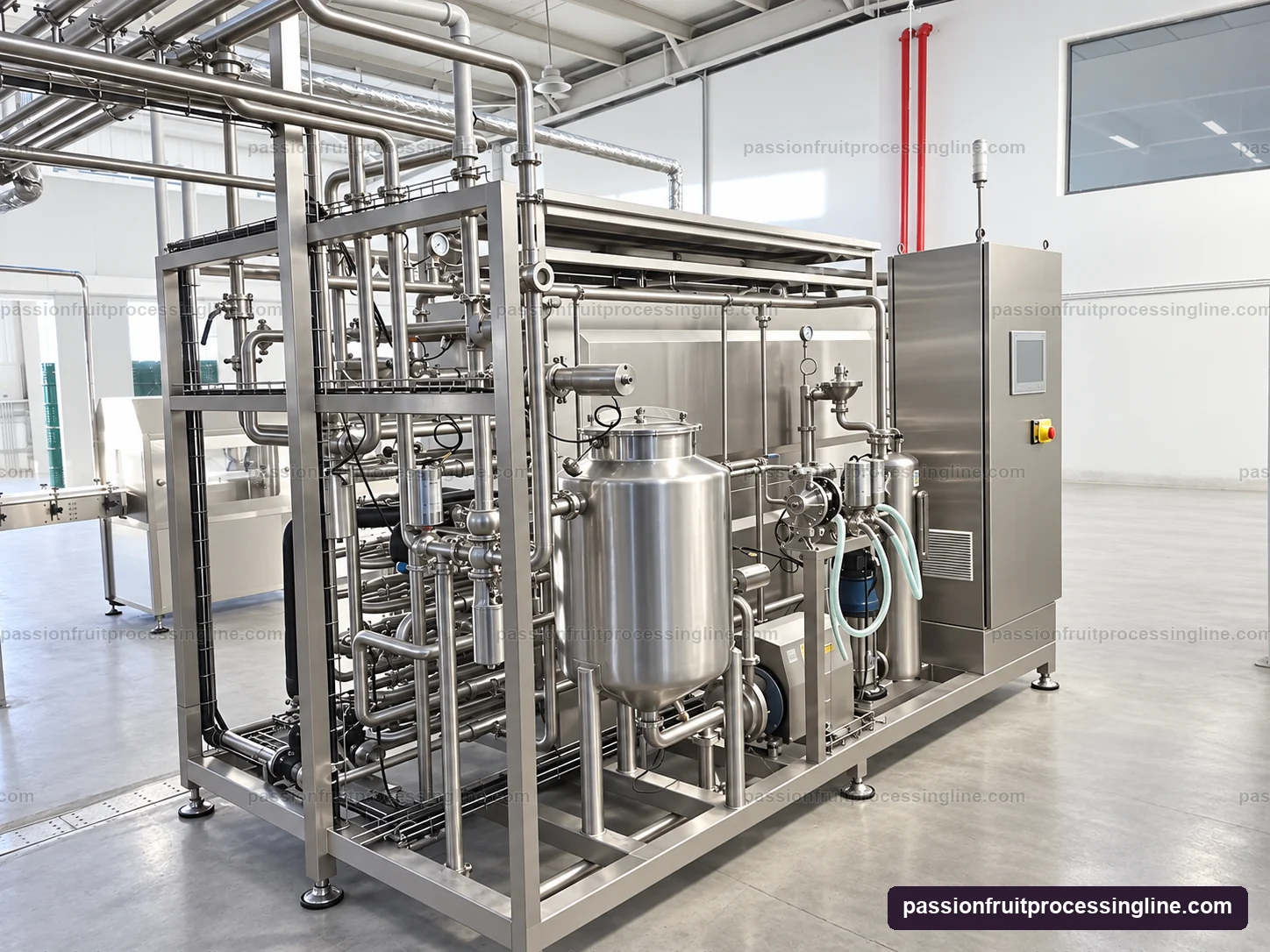
The tubular thermal system brings the product through controlled heating, holding and cooling. Flow, viscosity, suspended solids and changes during heating determine the selected arrangement. The thermal process is established for the actual product and package; an adjustable equipment temperature range is not a production recipe.
For bulk aseptic ingredients, the treated product transfers through a controlled connection to the bag filler. Bag fitment, filling head, metering and drum handling form one packaging configuration. Concentration is an additional route when the ingredient is to be sold at higher soluble solids, with its own evaporator and utility duty.
A line balance that keeps unlike quantities separate
The line is coordinated across these boundaries rather than assigning the same capacity number to every machine. Fruit condition and the selected seed/pulp specification affect recovery, while the thermal and packaging sections need stable liquid feed.
| Boundary | Quantity to establish | What it sizes |
|---|---|---|
| Fruit preparation | Whole-fruit input mass per hour | Elevator, washing, inspection and opening feed |
| After shell and seed separation | Recovered liquid flow and product composition | Buffer, transfer and downstream treatment |
| Optional concentration | Water removed per hour at the inlet and outlet solids | Evaporator and utility system |
| Packing | Net product per bag and required changeover cycle | Filling arrangement and downstream handling |
Give each section the right cleaning access
Conveyors, fruit-contact surfaces, shell outlets and screens need direct access for removal of retained material and cleaning. Tanks, pipework and the thermal circuit can form closed cleaning routes supplied by a CIP system. The design separates product flow, cleaning return and open-machine wash water, with isolation points between sections.
A supply scope can combine new equipment with an existing fruit-opening or downstream packaging section. Its interfaces identify product condition, transfer height or pipe connection, control signals and cleaning responsibility so that the complete route is operable.
In practice
Questions about this stage
Can one line make both juice and a seed-containing pulp?
The product requirements determine which separation operations are used and whether material passes through or bypasses finishing. Seed retention changes the transfer, thermal and packaging requirements as well. It is a line configuration decision, not a promise that every finisher setting produces both products.
Can the line connect to an existing opening section?
Yes, the liquid-processing section can be arranged around an existing supply of extracted seed-pulp or finished juice. The connection is defined by the incoming composition, flow pattern, temperature and cleaning boundary.