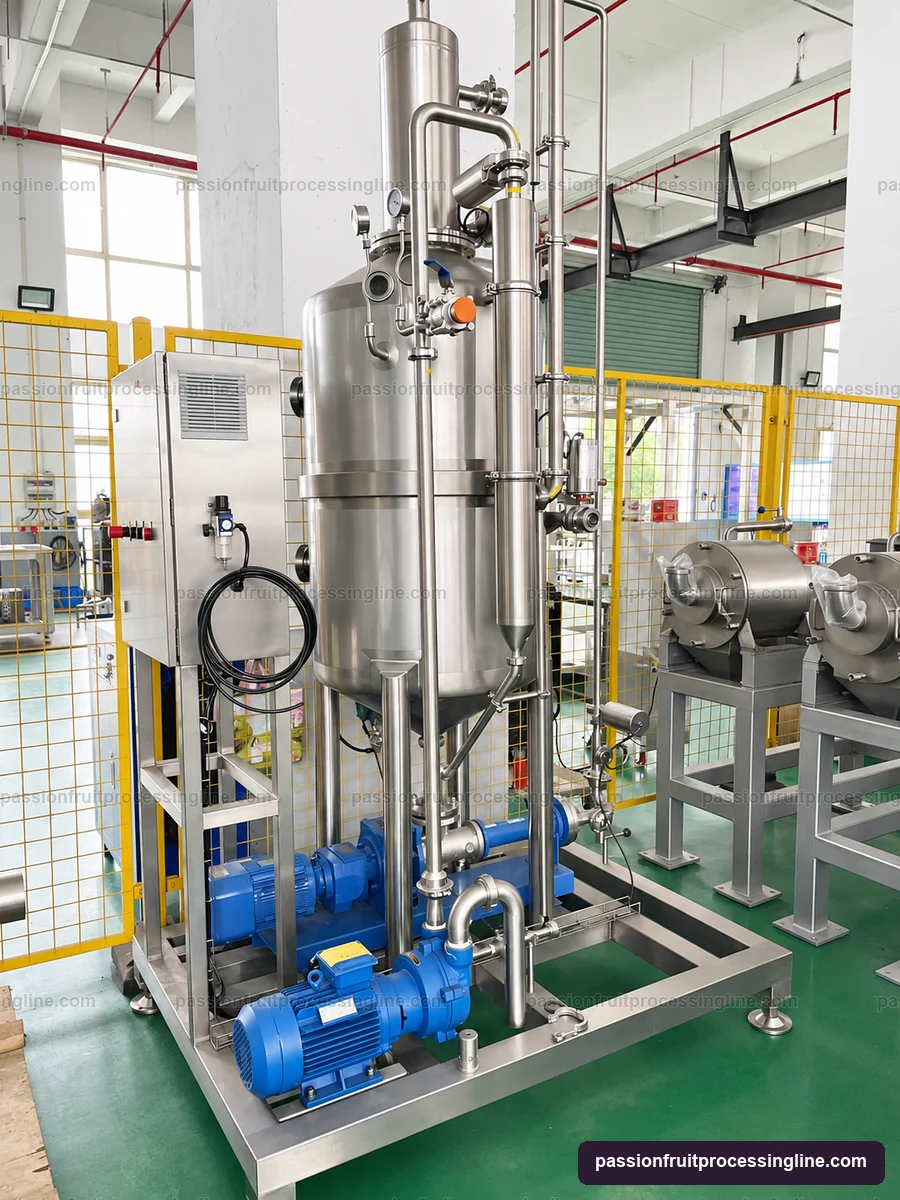
Manage the vessel and the liquid discharge as one operation
Reduced pressure allows gases to leave the liquid in the chamber. The vacuum circuit removes released gas, while controlled liquid level and a matched discharge arrangement keep the outlet supplied. A condenser and its condensate route should be defined with the selected vacuum package.
Foam, viscosity, pulp loading and inlet temperature affect operation. Check their range before selecting vessel duty and pump conditions. Installing a deaerator does not remove the need to limit unnecessary air entry at upstream tank outlets, pump suction points and open transfers.
TQJ family selection references
The table lists the upper liquid rate for each catalogue model, with its published power and envelope. These figures describe the generic model family. Establish passion fruit performance and the minimum stable flow for the selected product and configuration.
| Model | Catalogue upper liquid rate | Listed power | Catalogue dimensions |
|---|---|---|---|
| TQJ-5000 | 5000 L/h | 2.2 + 2.2 kW | 1000 × 1200 × 2900 mm |
| TQJ-10000 | 10000 L/h | 2.2 + 3.0 kW | 1200 × 1500 × 2900 mm |
Specify gas removal alongside the aroma requirement
Passion fruit aroma makes vacuum conditions and temperature important process choices. Evaluate the intended air reduction with product samples, including the sensory and analytical criteria agreed for the ingredient. A lower pressure should not be treated as an automatic improvement in finished-product quality.
If the process includes volatile collection or an aroma recovery arrangement, describe its components, condensate handling and product return explicitly. Standard deaeration is not a promise of complete oxygen removal or unchanged aroma.
Confirm the selected vessel and control arrangement
The alternate configuration shows a different placement of the cabinet and vessel ports. Use the selected general arrangement drawing to establish pipe connections, service space, vacuum utilities and discharge access.
The cleaning plan should cover the chamber, product pump and connected liquid pipework. Confirm how the vacuum circuit is protected during cleaning and how the vessel returns to the intended operating condition after draining.
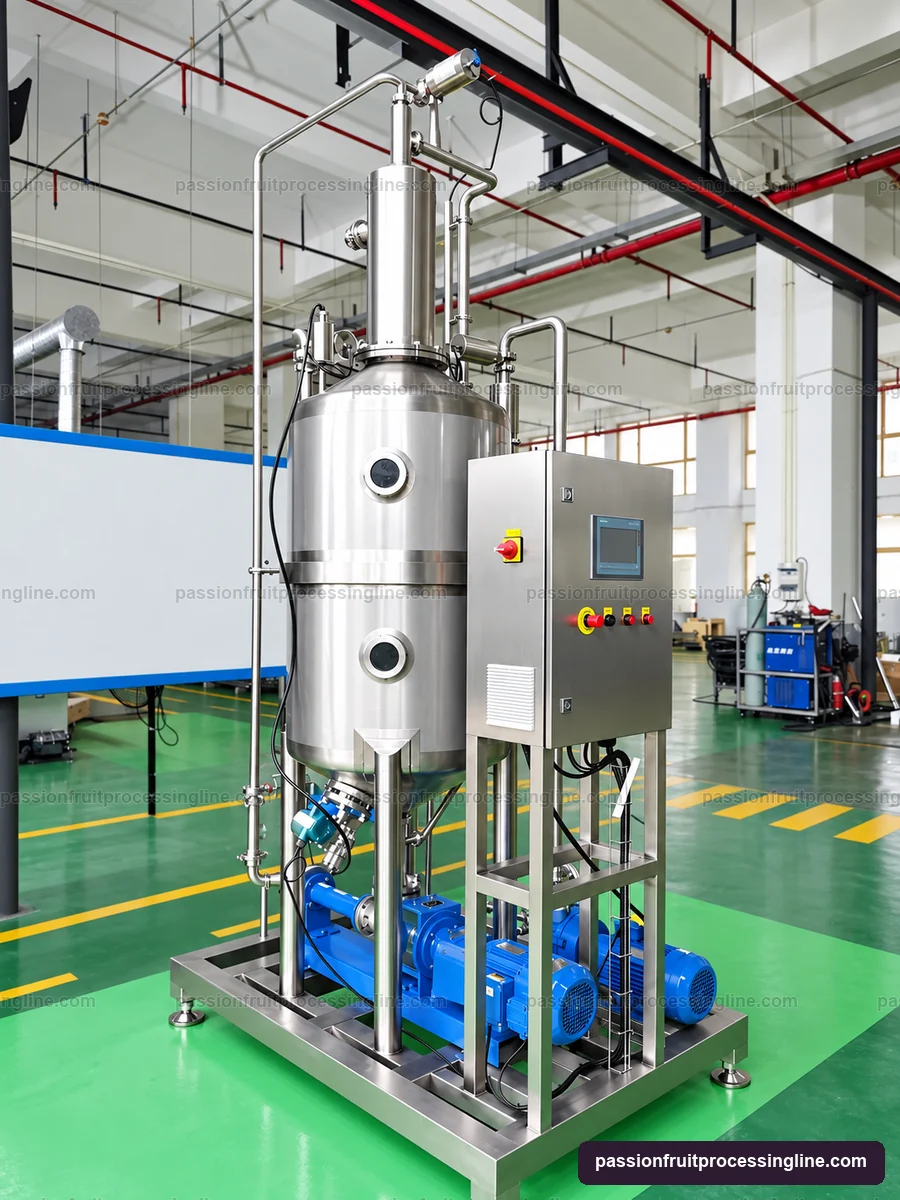
In practice
Questions about this stage
How is a stable operating range established?
Confirm it for the selected vessel, vacuum package and product over the intended feed conditions. The catalogue upper rate is a sizing reference; it does not define turndown, gas-removal performance or acceptable foaming at every lower flow.