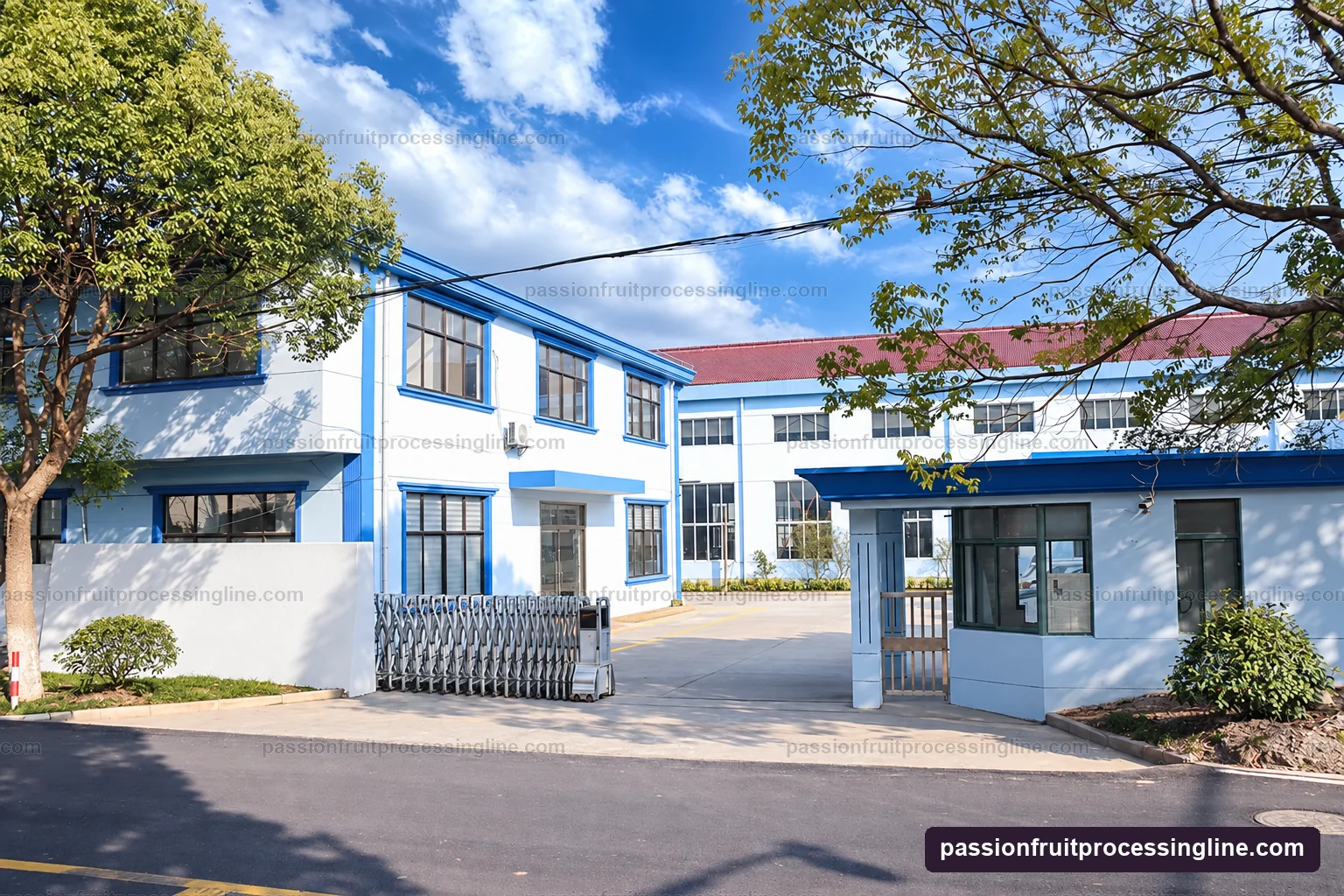
Different construction for open and closed duties
Open fruit handling uses accessible belts, rollers, collection surfaces and guards. Product-contact surfaces need to be reached for cleaning, while drives and operator positions remain protected. Screened refining adds access to the working chambers and separation components.
Closed liquid equipment is built around vessels, hygienic connections, valves and pipework. Material grade, seals and joints are selected for the product, temperature and cleaning conditions. A stainless exterior alone does not describe the suitability of every product-contact component.
See how a skid is assembled
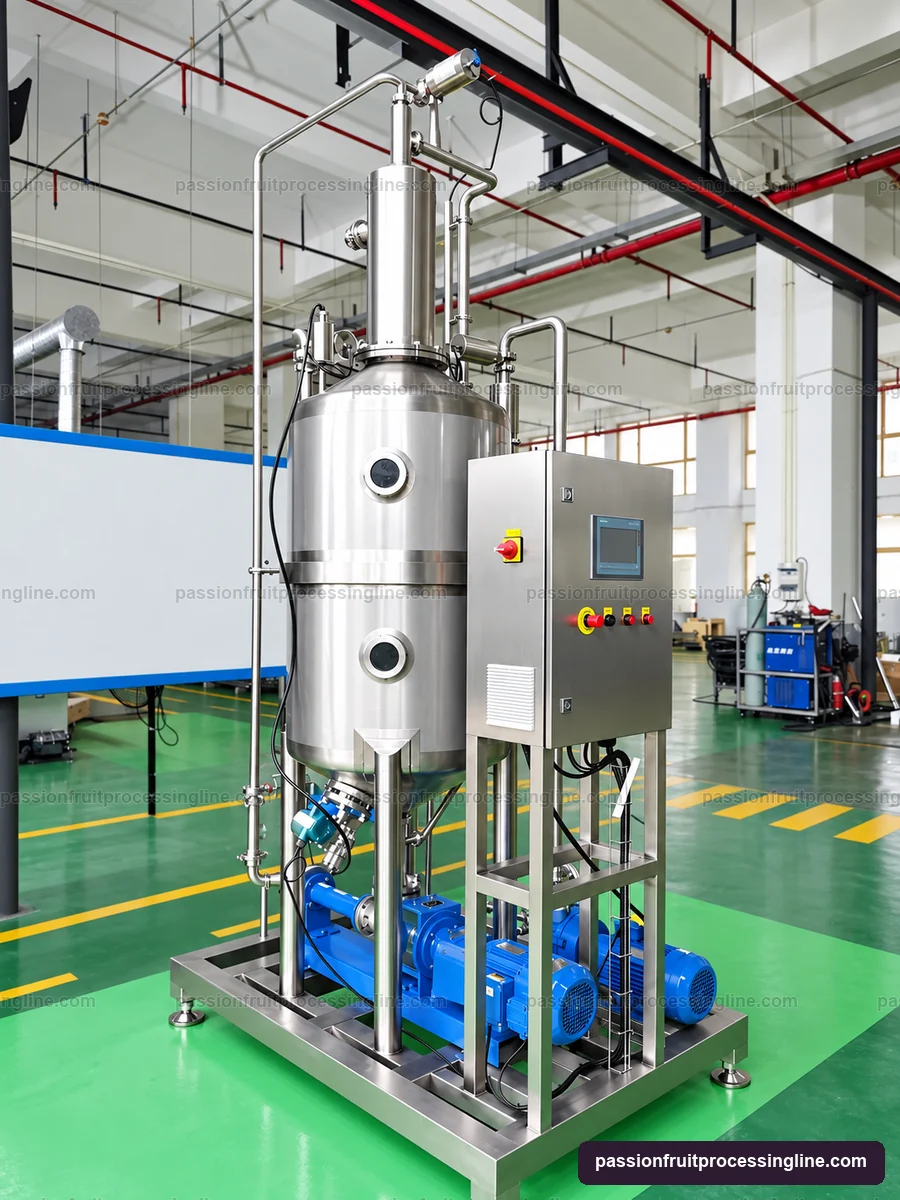
The thermal skid brings pipe banks, vessels, pumps, instrumentation and a control cabinet into a coordinated assembly. The deaerator combines a vacuum vessel, condenser section and controlled discharge. The evaporator extends this arrangement into larger vessels, circulation pipework and access structures.
Maintenance space follows these components: pumps and seals need room for service, connections need tool access, and a control cabinet needs a clear working position. The installation layout carries these requirements into the receiving factory.
Support the interfaces as well as the machines
Engineering support can cover the process arrangement, equipment layout, utility interfaces and installation coordination. For an extension to an existing plant, the work also identifies the condition of the incoming product, transfer connections and control signals between old and new sections.
Installation, commissioning and operator training are scoped with the equipment supply. The useful handover explains starting, stopping, cleaning, fault response and routine component care for the actual configuration, with the relevant equipment documents and parts identification.
Keep mechanical checks and product trials distinct
Assembly inspection addresses the delivered equipment, connections, access and controls. A circulation or water test checks selected mechanical and control functions. Where a product trial is included, the records must also identify the fruit or prepared liquid, process settings and measurement conditions.
Site acceptance then concerns the installed interfaces and agreed operating scope. Product capacity, separation quality and packaging results belong to defined tests; they are not established solely by a photograph of an assembled machine.