Two starting points, different supply scopes
An existing fruit-preparation line does not need to be bought again when the project concerns downstream treatment. Conversely, a liquid-processing skid alone does not provide the opening and shell-handling section needed by a whole-fruit operation.
| Starting point | Section being purchased | Main interface |
|---|---|---|
| Whole fresh fruit | Preparation, opening/collection, selected finishing and liquid processing | Fruit intake and separate shell/seed streams |
| Existing extracted juice or pulp | Receiving, buffering and selected downstream operations | Incoming liquid composition, temperature and flow pattern |
Specify what remains in the product
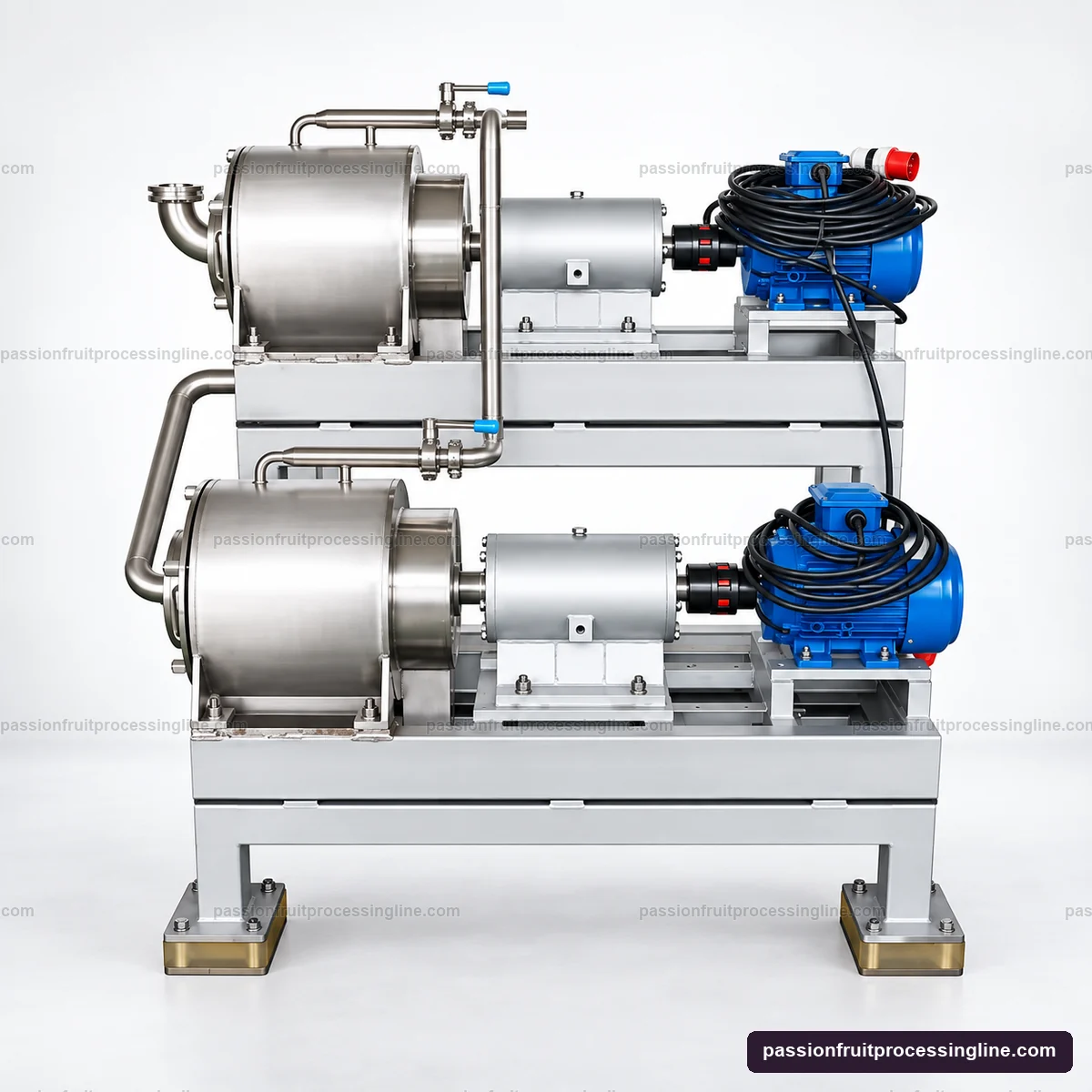
The seed requirement is distinct from suspended pulp and soluble solids. A seed-free juice can still contain fine pulp; a seed-containing ingredient needs a transfer and packaging route that accommodates its intended inclusions. These choices affect the use of the finisher and the downstream passage sizes.
The appropriate finishing setting is selected with the actual extracted material. A small screen does not by itself guarantee a desired texture, recovery or absence of broken seeds.
Concentration is a separate decision
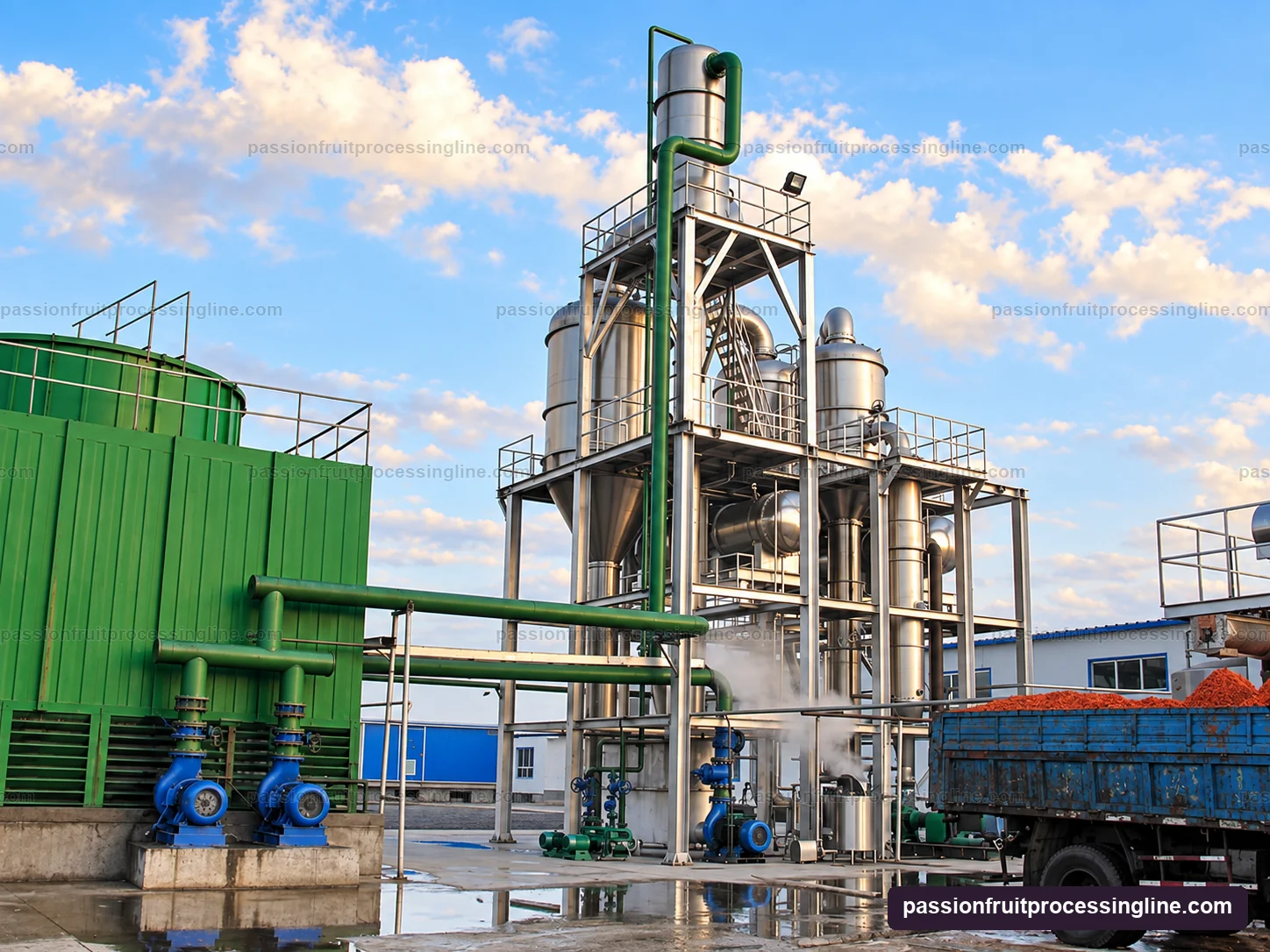
An evaporator removes water for a concentrated ingredient. It is selected by the inlet and final solids, water-removal duty and changing product behaviour, rather than by the fresh-fruit capacity of the line. Falling-film and forced-circulation arrangements address different circulation and heat-transfer conditions.
A plant making a single-strength bulk ingredient can proceed without evaporation. A plant receiving concentrate may need suitable handling and treatment without an evaporator of its own.
Work back from the package and operating pattern
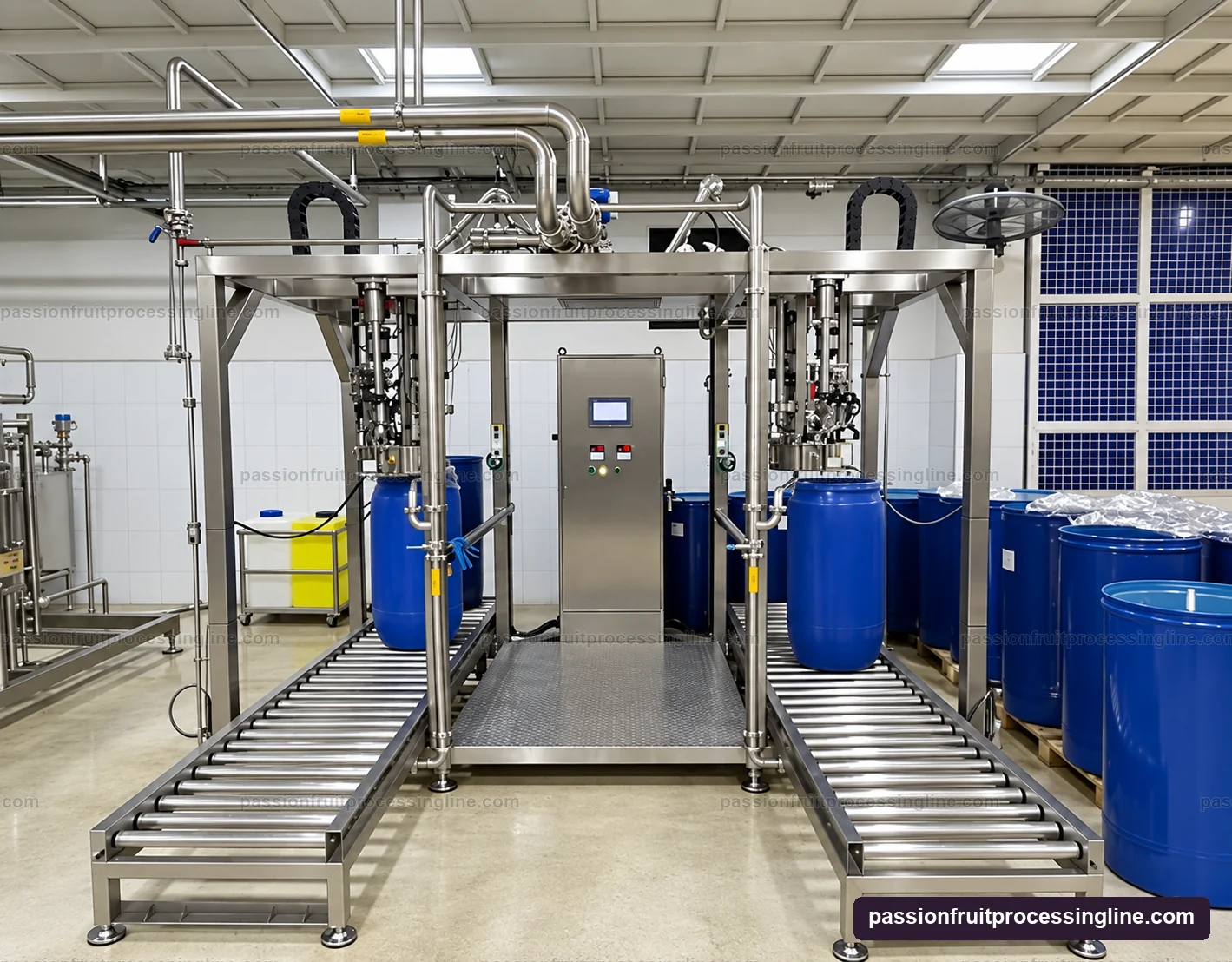
Bulk aseptic bags require a compatible filling interface and a maintained sterile connection from product treatment. Container handling and bag changeovers establish the practical cycle that the upstream flow must support. Package size alone is insufficient to select a filler.
Daily operating hours, seasonal fruit supply and cleaning changes affect the equipment arrangement. The engineering balance includes productive flow and planned stops, with a buffer and control response at each continuous-to-intermittent interface.
In practice
Questions about this stage
How is the required line capacity established?
Begin with the incoming fruit or prepared-liquid supply and the operating hours available. Whole-fruit mass, recovered liquid flow and packed output remain separate quantities. The selected product, cleaning periods and packaging cycle determine which section limits sustained production.
Can an existing extraction section feed new treatment equipment?
Yes. The downstream section can begin with extracted seed-pulp or prepared juice. Its inlet is defined by the composition, flow pattern, temperature and connections of that existing process, with finishing included where the intended product requires it.
Can one installation supply more than one ingredient?
Shared handling and treatment equipment can be arranged for compatible product routes. Seed retention, pulp content, concentration and the package each affect that arrangement. The equipment and changeover sequence must support the intended products, rather than assuming that all are made by the same settings.
How are recovery and seed removal specified?
Use representative fruit and an agreed finished-product definition. Measure product and reject streams over the same operating interval, then assess recovery together with residual seeds, fragments and pulp content. A nominal machine rate does not establish either result.
What determines treatment conditions and utility demand?
Treatment follows the actual product and packaging process. Heating, cooling, vacuum and electrical duties follow the selected equipment and operating conditions. These are established as part of the line design, with input and output conditions stated for each section.