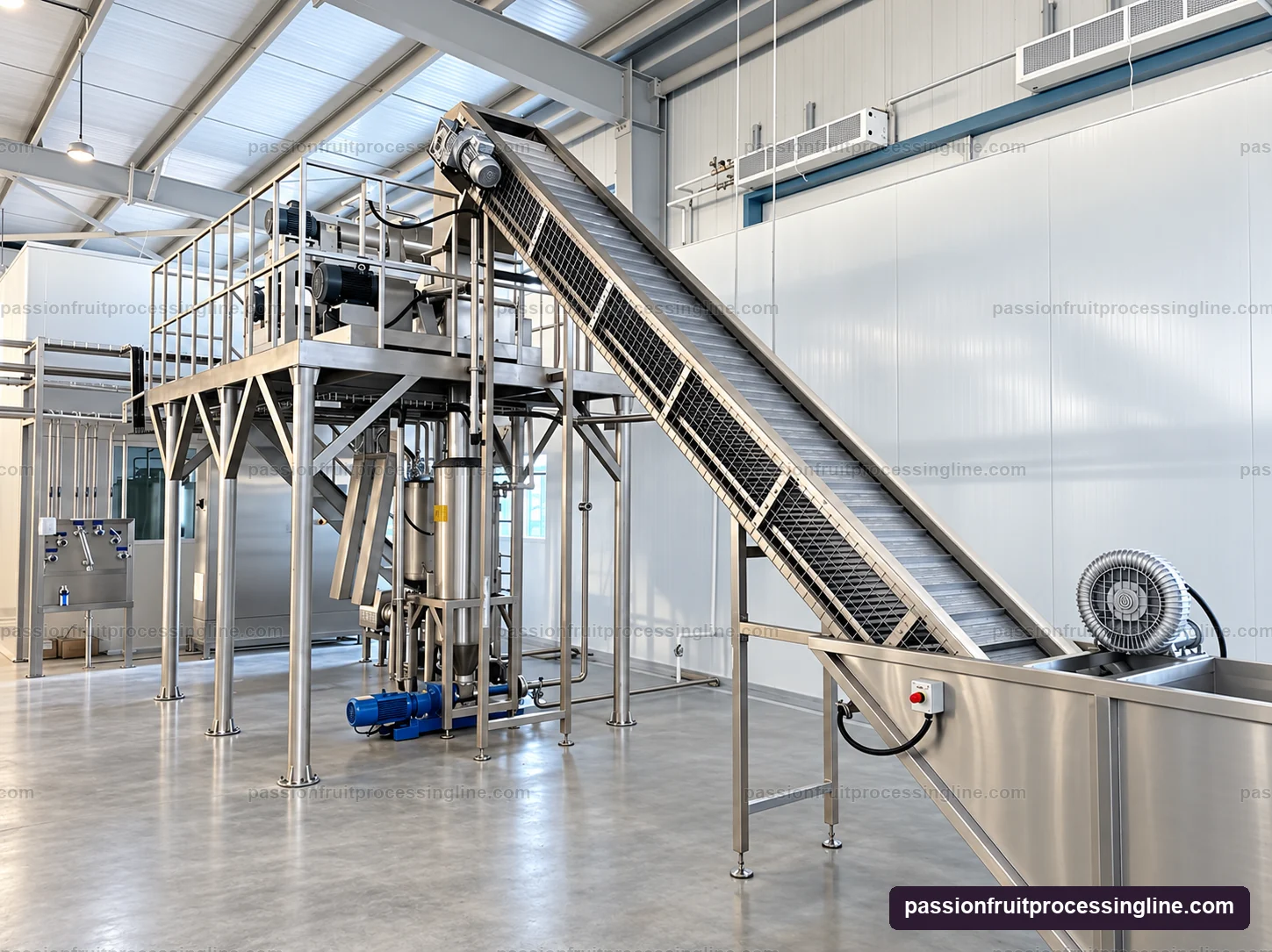
A defined transfer path from delivery to processing
The lower receiving section gathers fruit at an accessible level. The inclined belt carries the fruit to a raised outlet, while side guarding confines the transfer path. The installation shown also illustrates the space needed around the upper discharge for the next machine and its service access.
Passion fruit can roll, bridge at an outlet or accumulate at a stopped downstream machine. Belt loading, retaining features and transfer clearances therefore need to work together. Fruit size distribution and peel condition matter as much as the average hourly mass.
Specify the two ends of the elevator
| Interface | Design input | Operating purpose |
|---|---|---|
| Receiving | Bin discharge height, feed surges and fruit size range | Load the belt without an uncontrolled heap |
| Incline | Required lift, available floor length and fruit behaviour | Maintain a stable fruit bed along the transfer |
| Discharge | Next-machine inlet height and permitted drop | Deliver fruit into the intended receiving area |
| Line control | Downstream ready signal and upstream stop arrangement | Prevent continued feed into a stopped stage |
Connect washing and opening without mixing material streams
Place the elevator according to the actual receiving arrangement: it may feed a washing stage or transfer washed fruit to an opening operation. Keep dirty receiving water, washed fruit and shell discharge on defined routes. The conveyor changes elevation; shell opening and juice release are separate process duties.
A line layout should show the fruit outlet and all waste-handling paths at the same time. An elevator that fits in isolation can still obstruct the access needed to clear a shell chute or remove a washer component.
Allow space for cleaning and belt service
Provide access to the hopper corners, belt return, retaining features and discharge transition. Wet fruit debris must be removable without collecting below guarded drives or being carried back toward clean fruit.
Confirm belt material, washdown compatibility, drainage, guards and service isolation in the equipment specification. Include the actual lift and transfer arrangement in the quotation; overall dimensions and drive power follow that configuration.
In practice
Questions about this stage
Can the same elevator serve any fruit-opening machine?
Its discharge must match the selected opening machine: inlet height, feed width, permitted drop and downstream stop signal all need to agree. A suitable fruit feed rate alone does not establish that fit.