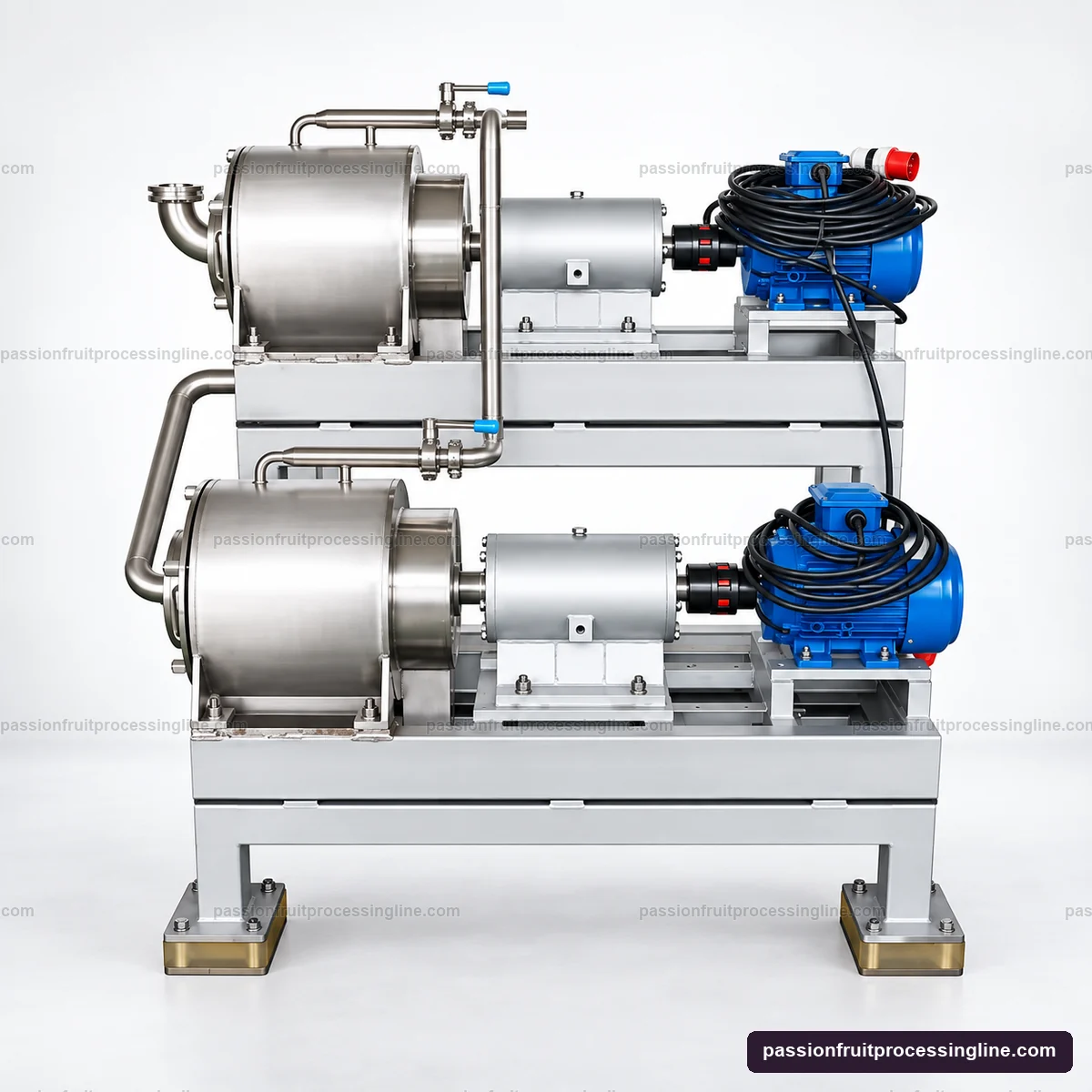
Finish collected pulp after the shells have been handled
Fruit opening and shell handling establish the inlet to this machine. The finisher receives the collected pulp stream; it should not be selected as a whole-fruit opening machine. Screened finishing separates the accepted liquid and pulp fraction from the retained material under the chosen operating conditions.
For passion fruit, screen choice alone does not establish the result. Feed condition, seed integrity, rotor action and loading influence both the accepted fraction and the reject stream. Compare pulp content, broken-seed carryover and recoverable product in the rejects during trials.
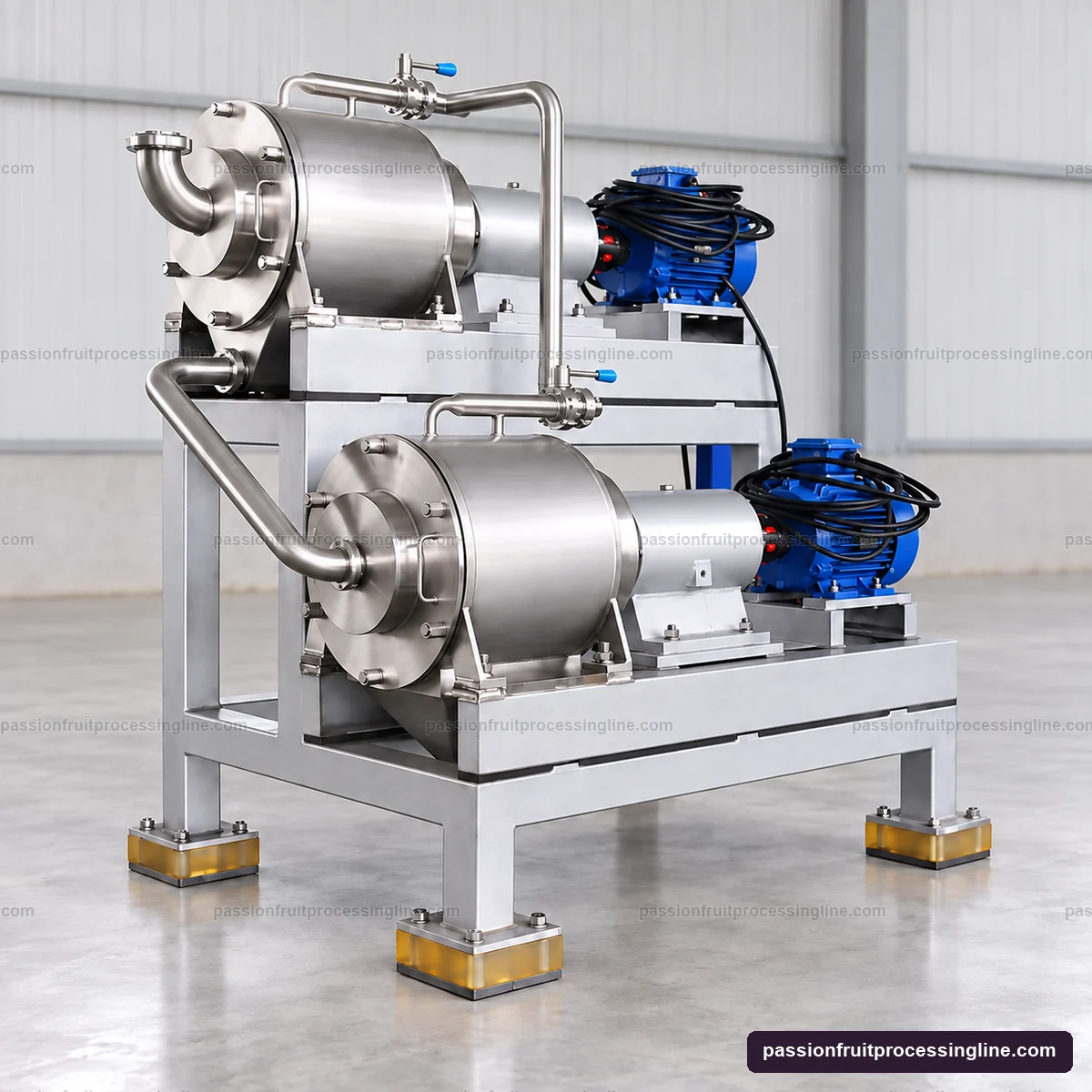
DJ family reference models
These are general fruit-processing catalogue ratings for the DJ family. They are selection references, not guaranteed passion fruit throughput. Confirm the exact build and service envelope after establishing the prepared-feed and finished-product requirements.
| Model | Catalogue fruit duty | Listed drive power | Catalogue dimensions |
|---|---|---|---|
| DJ-3 | 1–3 t/h | 4.0 × 2 kW | 1550 × 1040 × 1500 mm |
| DJ-5 | 5 t/h | 7.5 × 2 kW | 1550 × 1040 × 1500 mm |
| DJ-10 | 10 t/h | 18.5 × 2 kW | 1900 × 1300 × 2000 mm |
| DJ-15 | 15 t/h | 30 + 18.5 kW | 2400 × 1400 × 2200 mm |
| DJ-25 | 25 t/h | 45 + 37 kW | 2400 × 1400 × 2200 mm |
Choose the finished product before choosing the screen
A juice intended for concentration, a pulpy ingredient and a product that deliberately retains seeds need different separation outcomes. Define the accepted seed content and texture first. A seed-retaining product may need a different route around fine finishing, with hygienic handling specified for that product stream.
For a seed-reduced stream, record the prepared-feed rate, its temperature and consistency, the selected screens, accepted-product quality and the reject mass. An increase in liquid recovery is useful only if the finished product also meets its seed and pulp specification.
Plan access to the screened chambers
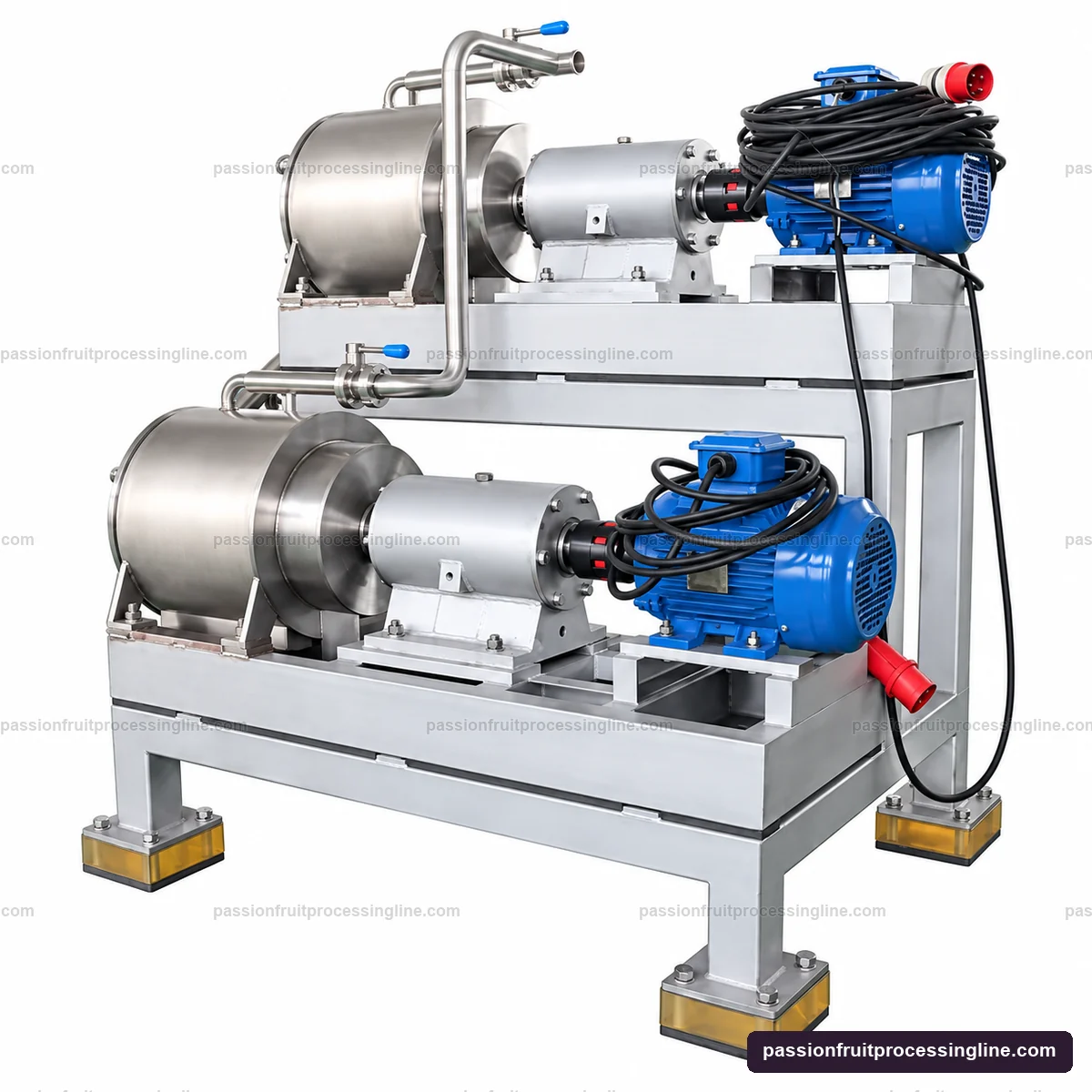
The end covers and screened sections require service clearance. Include safe isolation, removal space, a route for wet rejects and inspection after cleaning. Seed fragments and pulp retained at screens, seals or transitions need particular attention.
Agree which components are cleaned in place and which require removal or inspection. A downstream closed CIP circuit does not automatically clean every surface of an open-feed finishing machine.
In practice
Questions about this stage
Can the DJ family table be used as the passion fruit line capacity?
No. The table describes general fruit duty. Size the line using representative prepared pulp, the required seed and pulp specification and the measured accepted and reject flows. Keep whole-fruit intake separate from finisher feed.