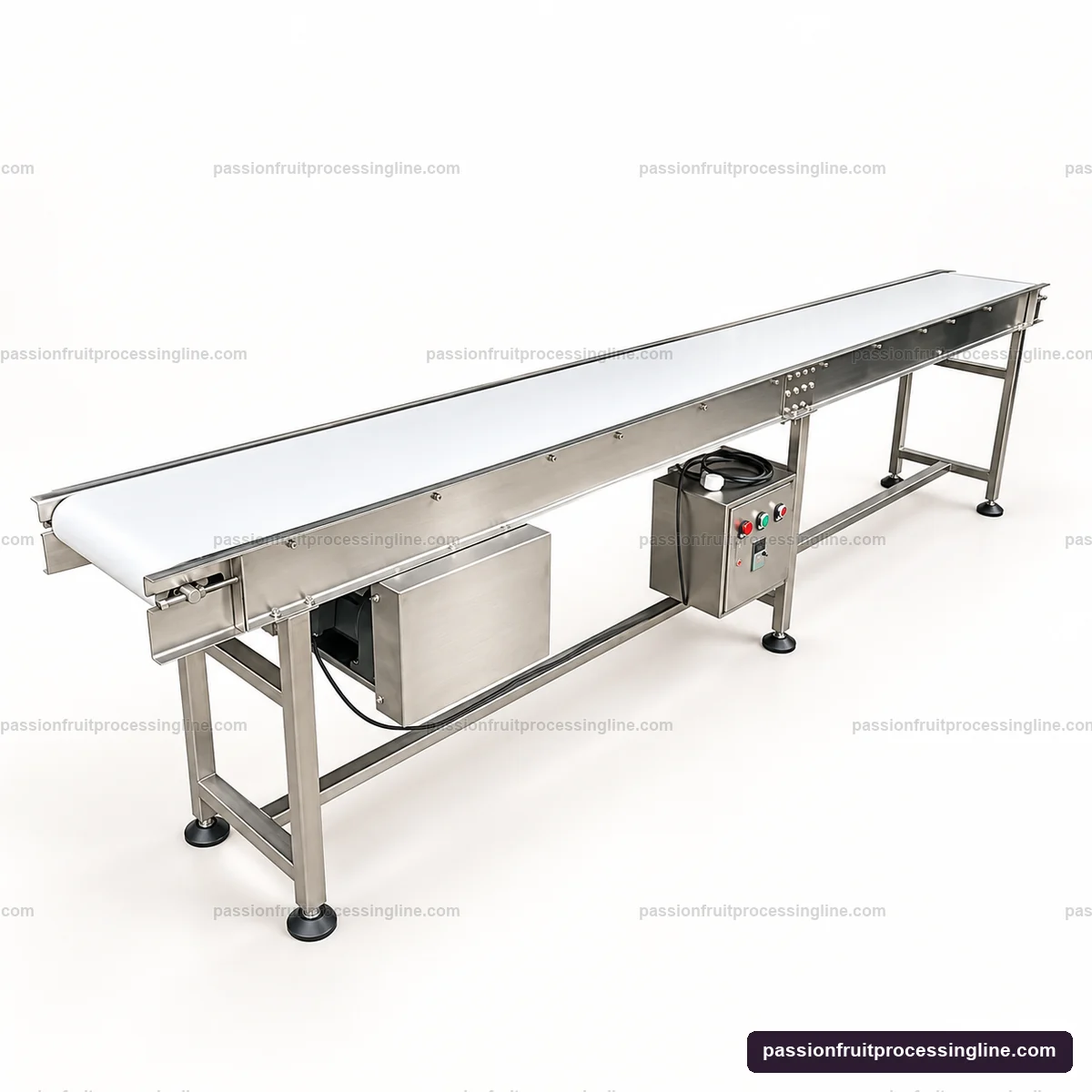
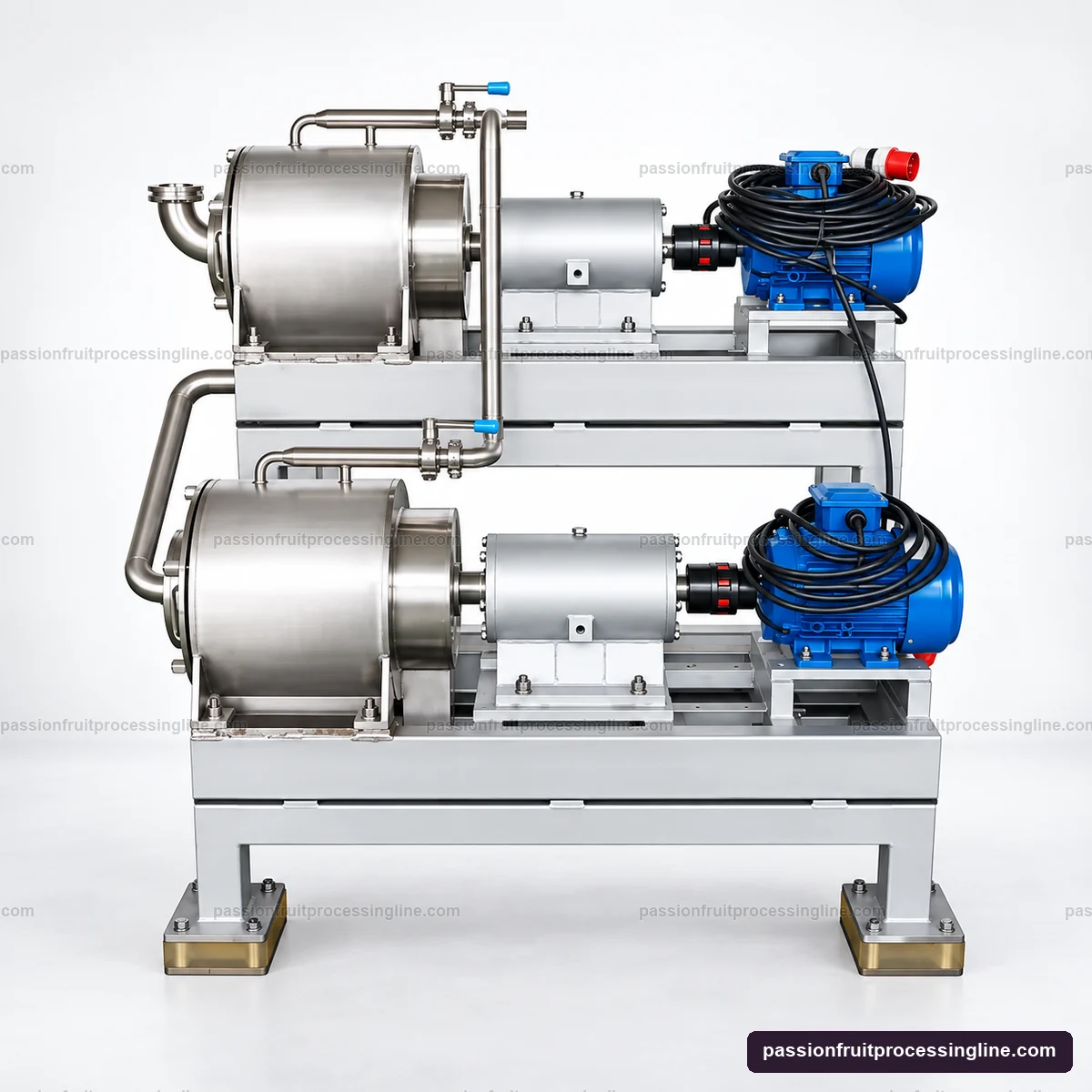
The front end is a set of boundaries, not one machine
The first boundary is receiving: fruit is weighed, inspected and either accepted or diverted. The second is preparation, where surface dirt and unsuitable fruit are removed before the shell is opened. The third is opening itself, which creates at least two streams: the shell material and the seed-bearing interior. A fourth boundary may follow where pulp is collected, buffered or transferred to finishing.
FAO’s general juice guidance makes the point that fruit structure determines the extraction route. Passion fruit is grouped with materials that have a brittle inedible skin and seeds, so the useful separation is gentle rather than a thorough comminution of everything. That principle is more stable than any claim about a particular opening machine. The catalogued finisher on this site is a downstream device, not a whole-fruit opener.
Receive only what the opening step can handle
Opening performance starts with the condition of the incoming fruit. Size range, ripeness, splits, soft fruit and foreign material all affect how the fruit presents to the opening interface. A receiving inspection that removes unacceptable fruit and records the reason is part of the process, not an administrative extra.
Washing is also a boundary. Surface dirt and residues should leave on a defined wash-water route rather than being carried into the opening area or spread across the product collection surface. The equipment arrangement should show the dirty side, the washed-fruit side and the waste route at the same time. A layout that looks tidy in plan can still create a cross-flow if shell bins, drains and access paths are placed without that separation in mind.
Open with a defined method and a separate shell outlet
FAO describes several commercial approaches to passion fruit extraction, including centrifugal separation of pulp and some seeds from mechanically sliced fruit, a system that lightly crushes fruit between rotating disks, and a compression-roller arrangement. The descriptions do not establish one universal machine geometry, and they do not make any of those machines a catalogue item on this site.
What they do establish is a design question: where does the shell go, and how is it kept away from the collected interior? The opening step needs an accessible shell discharge that does not cross the product collection area. It also needs a defined response when fruit is misshapen, overripe or too small for the intended feed. Those are line-interface decisions, even when the opening equipment is supplied by another party.
Collect the seed-bearing pulp without damaging the seeds
The interior of passion fruit contains many small seeds, each surrounded by an edible aril. The valuable material is the aril and the pulp around it; broken seed coat and seed fragments are a different stream. Rough transfer, an unsuitable pump or an over-aggressive opening action can turn seed condition from a specification into a defect.
The collection arrangement should avoid unnecessary drop heights, sharp transitions and prolonged holding before finishing. Sample the collected material for intact seeds, broken fragments, shell pieces and foreign matter. The check belongs at the handoff, not only at the finished-product tank, because that is where the cause can still be identified and corrected.
Treat the finisher as a downstream device
FAO describes a finisher with a screen in the approximate 0.8 to 0.3 millimetre range separating seeds from juice in the systems it reviews. That is a useful process reference, not a guarantee for every passion fruit product. The feed condition, screen condition, loading and mechanical action all affect what passes through and what is retained.
The essential handoff is therefore a material specification: prepared seed-pulp, free of whole fruit and with a stated shell and seed condition. If the upstream step cannot deliver that, the finisher is being asked to solve a problem it was not selected for. A trial should compare the product stream with the shell and seed-rich outlets over the same operating interval, rather than judging the finisher from one attractive sample.
Record the handoff as an operating condition
A front-end record can be short, but it needs to identify the lot, the opening period, the approximate feed and the condition of the collected material. Note the shell outlet weight or volume, the seed-rich reject and any interruptions. If the opening method changes, or a new fruit size range arrives, the record should show that change next to the resulting product condition.
This is also where cleaning responsibility is assigned. Open collection surfaces, screens and shell chutes need access for removal of retained material; closed transfer lines need a defined cleaning route. A CIP connection does not clean an open opening table. The handoff record should show who inspects what before the next run, especially after a product change or a long stop.
Assess the front end on representative fruit
A useful front-end trial uses the fruit the plant expects to buy, not a perfect sample selected for the demonstration. It should include the small and large sizes, the range of maturity and the defects that the receiving procedure is meant to catch. Measure the product and reject streams, inspect the shell outlet and check the seed condition in the collected material.
The result is not a universal capacity or yield. It is a documented relationship between this fruit, this opening arrangement and this finishing feed. That relationship is what allows the next equipment decision to be made without pretending that an unverified opener exists or that a finisher can substitute for one.
Primary sources
Sources used in this note
Links were checked on 28 October 2026. They inform the process context above; they do not validate a machine configuration, a commercial result or a processing schedule for another product.
- FAO Bulletin 146, Chapter 15: Tropical fruitswww.fao.org/4/y2515e/y2515e17.htm
- FAO Bulletin 146, Chapter 6: General juice manufacture principleswww.fao.org/4/y2515e/y2515e07.htm